
How To
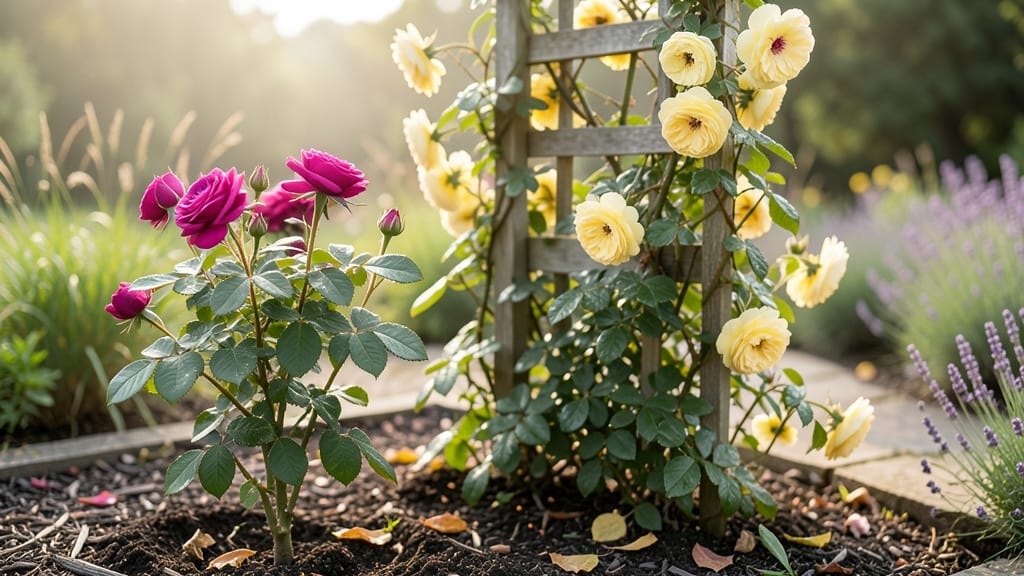
Rose bushes can grow anywhere from 1 foot to over 20 feet tall, depending on the variety you choose—so picking the right one for your space is the first step to avoiding a garden full of overgrown giants.
Picture this: you plant a miniature rose expecting a cute, low-maintenance border plant, only to watch it stretch toward the sky like a climber. Or, you invest in a climbing rose for your fence, but it refuses to reach the top, leaving you with a tangled mess.
The truth is, rose heights vary wildly, and getting it wrong can mean crowded blooms, poor airflow, or even plant stress.
In this guide, we’ll break down the height ranges for dwarf roses, shrub roses, climbers, and everything in between—plus how to prune and space them for healthy growth.
Whether you’re designing a small urban garden or training a rose to cover a trellis, knowing these rules will save you time, frustration, and maybe even a few pruning mishaps.
You’ll also learn how to control overgrowth with simple techniques, debunk common myths about rose sizes, and pick the perfect variety for your space—so your roses stay beautiful without taking over your yard.

Rose bush height by variety: from dwarf to climbing giants
Choosing the right rose variety isn't just about bloom color—it's about understanding how tall your roses will grow. A 3-foot dwarf rose planted next to a 10-foot climber creates a recipe for disaster, with overcrowding and poor airflow.
I've seen gardeners struggle when they assume all roses reach the same height, only to find their David Austin roses towering over their miniature roses.
Rose heights vary dramatically, from 1-foot patio roses to 20-foot climbing giants. The key is selecting varieties that match your space and design goals. For example, hybrid teas typically grow 3-5 feet tall, while Floribunda roses often reach 4-6 feet.
Understanding these differences helps you plan spacing, pruning, and even trellis systems before planting.
Let's start with the smallest roses—dwarf varieties like 'Fairy' roses or 'Tom Thumb' stay under 2 feet tall, making them perfect for container gardening or window boxes. These roses grow slowly and rarely need pruning beyond removing dead blooms.
I've used them in balcony gardens where space is limited, and they thrive in 6-inch pots with regular watering.
The miniature roses category includes varieties like 'Angel Face' and 'Pink Parasol', which typically reach 1-2 feet at maturity. What makes them special is their proportionally large blooms on tiny plants.
These are ideal for rock gardens or as edging plants along pathways. Their compact size means they rarely outgrow their space, but they still produce hundreds of blooms per season.
Moving up in size, shrub roses like 'Knock Out Roses' or 'The Fairy' grow 3-6 feet tall with a multi-stemmed habit.
Proper spacing and pruning rules to maximize rose bush growth
Getting the spacing and pruning right is key to preventing overcrowded rose bushes that struggle to reach their full potential. I’ve learned the hard way—skipping proper spacing leads to poor airflow, while aggressive pruning can stunt growth.
The good news? With the right approach, your roses will thrive and bloom beautifully while staying within their ideal height ranges.
First, let’s talk spacing. The distance between rose bushes depends entirely on their mature size. Shrub roses (like Knock Out roses) need about 2–3 feet of space, while climbing roses (such as New Dawn) require 6–10 feet to sprawl without competing for nutrients.
Proper spacing ensures each plant gets enough sunlight and air circulation, reducing disease risk and encouraging stronger stems.
Shrub Roses: Space 2–3 feet apart for mature sizes of 3–5 feet. This prevents overcrowding and allows for easy maintenance.
Climbing Roses: Provide 6–10 feet of space since they can grow 10–20 feet tall and need trellises or fences for support.
Dwarf Roses: Keep 1–2 feet apart for mature heights of 1–3 feet. These are perfect for containers or small gardens.
Standard Roses: Space 3–5 feet apart for mature heights of 5–10 feet. These need room for their bushy canopies.
Now, let’s dive into pruning, which directly impacts how tall your roses grow. I always prune my roses in early spring (just as new growth starts) to shape them and remove dead wood.
For climbing roses, I focus on training vines along trellises to encourage vertical growth. Meanwhile, shrub roses benefit from cutting back about one-third of their height to promote bushier, healthier growth.
In warmer climates, I do a second light pruning in late summer to remove spent blooms and encourage new flowers.
This keeps the plant from becoming leggy and ensures a steady supply of blooms. Cooler climates require a more conservative approach—prune lightly in spring and avoid heavy cuts that could stress the plant before winter.
Remember, pruning tools matter too. Always use clean, sharp shears to make precise cuts just above an outward-facing bud. This encourages growth in the right direction and keeps your roses looking their best.
With the right spacing and pruning, your roses will grow to their full potential without overcrowding or struggling for space.