
Pests and Diseases
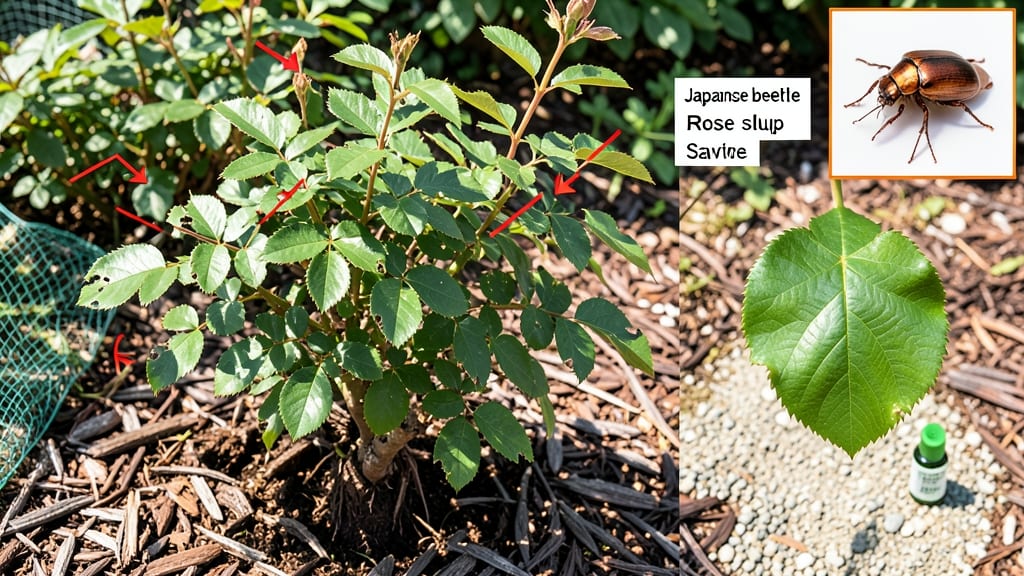
My rose bush has holes in the leaves, and that’s never a good sign. 🌿 Holes in rose foliage usually mean one of three culprits: rose slugs (those slimy caterpillars), sawfly larvae (tiny green munchers), or spider mites (almost invisible but destructive).
The good news? Each has a targeted fix, and early action means saving your blooms before they’re history.
First, inspect the damage up close: Are the holes jagged (sawfly larvae) or smooth (rose slugs)? Check the undersides of leaves—tiny eggs or webbing mean spider mites. I’ve seen roses go from ragged to lush again in just 7-10 days with the right treatment.
The key is acting fast before the pests move to the buds and flowers.
For rose slugs and sawflies, handpicking (yes, really) or a soapy water spray works wonders. Spider mites need a stronger solution—neem oil or insecticidal soap applied in the evening. I’ve used this method on my Knock Out roses for three seasons now, and they’ve never looked better.
Prevention is easier than cleanup: Encourage ladybugs, remove infested leaves immediately, and water at the base (not overhead) to discourage pests. A healthy rose bush is its own best defense—so feed it well, prune for airflow, and keep an eye out for the first signs of trouble.
Root Causes of Leaf Damage
When your rose bush starts showing up with holes in its leaves, it’s rarely a random act of nature—it’s usually a clear sign that something is actively feeding, chewing, or weakening your plant.
Understanding the why behind these holes is the first step toward stopping the damage. Below, we break down the most common culprits, their behaviors, and the science behind their destructive habits.
Some pests are like tiny, relentless food critics—they only care about one thing: eating your rose leaves. These critters don’t just nibble; they puncture, skeletonize, or devour entire leaves, leaving behind telltale holes, chewed edges, or even just the leaf veins standing alone.
🐛 Japanese Beetles: The Gluttonous Invaders
If your rose leaves look like they’ve been attacked by a swarm of metallic green-and-copper invaders, Japanese beetles are likely the culprits. These beetles don’t just chew—they skeletonize leaves, leaving a lace-like pattern behind. Here’s why they’re so destructive:
- Feeding Behavior: Adult beetles feed in groups, using their strong mandibles to strip leaves of soft tissue, leaving only the tougher veins. They target roses, grapes, and other lush foliage.
- Life Cycle: They emerge in late spring/early summer and feed aggressively for about 4–6 weeks before dying. Their grubs, which live in soil, can also damage grass roots.
- Science Behind the Damage: Japanese beetles produce aggregation pheromones, which attract more beetles to the same plant. This creates a positive feedback loop—more beetles mean more damage.
Pro Tip: 💡 If you spot these beetles, act fast! Handpick them into soapy water or use neem oil to disrupt their feeding.
🦋 Rose Slugs & Sawfly Larvae: The Hidden Leaf Skeletons
Tiny, translucent, and often overlooked, rose slugs (sawfly larvae) are the sneaky architects of holey leaves. Unlike beetles, they don’t chew randomly—they roll leaves into tubes or leave behind a trail of frass (insect poop) while skeletonizing the leaf.
- Feeding Behavior: Larvae chew between leaf veins, creating a "window-pane" effect. They often target the undersides of leaves first.
- Life Cycle: Females lay eggs on rose leaves, and larvae emerge in 5–10 days. They go through multiple growth stages, each time increasing their appetite.
- Science Behind the Damage: Their chewing triggers the plant’s jasmonic acid response, which can make roses more susceptible to secondary pests or diseases.
Pro Tip: ✨ Check the undersides of leaves for these larvae—early removal can save your bush!
Not all leaf damage comes from chewing. Some pests pierce leaves with their mouthparts, sucking out sap and injecting toxins that cause discoloration, wilting, or holes. These pests are harder to spot but just as damaging.
🐜 Aphids & Spider Mites: The Tiny Vampires
Aphids and spider mites don’t chew—they stab leaves with their stylets (hollow mouthparts) to drink sap. While they don’t always create holes, their feeding weakens leaves, making them more vulnerable to tearing or disease. Over time, this stress can lead to:
- Yellowing or curling leaves (due to toxin injection).
- Stunted growth (as the plant diverts energy to repair damage).
- Secondary infections (honeydew from aphids attracts sooty mold).
Science Behind the Damage: Aphids produce salivary enzymes that break down plant cells, making it easier to slurp up nutrients. Spider mites, on the other hand, thrive in dry conditions and can explode in population if left unchecked.
Pro Tip: 🌡️ Blast aphids off with a strong stream of water, and treat mites with insecticidal soap or horticultural oil.
🐞 Scale Insects: The Sticky Leaf Glue
Scale insects are the masters of disguise—they attach themselves to leaves and stems, sucking sap while secreting a protective waxy coating. While they don’t create holes directly, their feeding causes:
- Sticky honeydew (which attracts ants and sooty mold).
- Leaf drop (as the plant starves from nutrient loss).
- Weakened structure (making leaves brittle and prone to tearing).
Science Behind the Damage: Scales disrupt the plant’s phloem (nutrient transport system), leading to chlorosis (yellowing) and eventual leaf death. Their waxy armor makes them resistant to many sprays.
Pro Tip: 🔪 Scrape them off with a stiff brush or use a cotton swab dipped in rubbing alcohol.
Not all leaf holes come from pests—sometimes, the damage is a symptom of stress or disease. While these don’t involve chewing insects, they can mimic pest damage and weaken your rose bush, making it more vulnerable to actual pests.
🌞 Sun Scorch & Heat Stress
If your rose leaves have irregular, dry holes along the edges—especially in hot, sunny conditions—you might be dealing with sun scorch. This happens when:
- Leaves overheat due to intense sunlight (common in young or thin leaves).
- The plant wilts slightly, causing leaf edges to dry out and crisp.
- Water loss exceeds the roots’ ability to replenish moisture.
Science Behind the Damage: High temperatures increase transpiration rates (water loss), while the plant’s cuticle (protective layer) may not be thick enough to prevent dehydration.
Pro Tip: 💦 Provide afternoon shade and mulch to retain soil moisture.
🍄 Fungal Infections: The Hidden Rot
Certain fungi, like anthracnose or leaf spot diseases, can cause leaves to develop ragged holes, especially in humid conditions. These pathogens:
- Enter through wounds or stomata (leaf pores).
- Thrive in wet, warm conditions (ideal for spore spread).
- Weaken leaf tissue, making it prone to tearing from wind or rain.
Science Behind the Damage: Fungi release enzymes that break down cell walls, causing necrosis (dead tissue). As the leaf rots, it becomes fragile and holes form.
Pro Tip: 🎯 Prune infected leaves immediately and apply fungicide to prevent spread.
Now that you know why your rose bush is getting holey, the next step is identifying the exact culprit and taking action. Check out our guide to spotting pests or jump to treatment options to save your roses!
Fix Hole Damage Fast
Now that you’ve identified the culprit behind those pesky leaf holes, it’s time to act! Each problem requires a targeted approach—whether it’s ridding your rose bush of unwelcome guests or fortifying its defenses against future attacks.
Below, we’ll break down practical, step-by-step solutions for every common cause, plus prevention tips to keep your roses lush and hole-free.
Signs: Skeletonized leaves, chewed edges, and beetles with coppery wings. How to Fix It: 🔥 Handpick beetles—Early morning or late evening (when they’re sluggish), shake them into a bucket of soapy water. Wear gloves! 🍳 Set up traps—Use commercial pheromone traps far from your roses (they can attract more beetles if placed nearby). 👨🍳 Apply neem oil—Spray leaves with a 1% neem oil solution (mix 1 tbsp neem oil + 1 tsp mild soap + 1 quart water). Reapply every 5–7 days. 🥘 Use row covers—Cover young plants with lightweight fabric to block beetles entirely.
💡 Pro Tip: Plant trap crops like marigolds or roses near your garden’s edge to lure beetles away.
Signs: Small, green, worm-like larvae with clear heads; leaves look like Swiss cheese. How to Fix It: 🔪 Handpick larvae—Drop them into a bucket of soapy water (they’re easy to spot on undersides of leaves). 🌡️ Use horticultural oil—Spray a 2% horticultural oil (like dormant oil) to suffocate them. Apply in the evening to avoid harming bees. ⏰ Encourage predators—Ladybugs and parasitic wasps love sawfly larvae. Avoid pesticides to attract them!
💡 Pro Tip: Prune heavily infested leaves and compost them separately (don’t add to your garden—larvae may survive).
Signs: Tiny webs, stippled leaves, and a dusty appearance (mites are nearly invisible to the naked eye). How to Fix It: 💦 Blast them off—Use a strong hose spray to dislodge mites from leaves (do this in the morning). 🌊 Rinse with water—For severe infestations, spray leaves with water twice daily for 3–5 days. 🎯 Apply miticides—Use neem oil, insecticidal soap, or spinosad (follow label instructions). Reapply every 5–7 days. ✨ Boost humidity—Mites thrive in dry conditions. Use a hose-end mister or mulch to retain moisture.
💡 Pro Tip: Reflective mulch (like aluminum foil) can deter mites by confusing their light-seeking behavior.
Signs: Dark spots with holes, yellowing leaves, and fungal growth on stems. How to Fix It: ✂️ Prune infected leaves—Remove and dispose of (don’t compost) all damaged foliage immediately. 🧼 Clean tools—Sterilize pruners with rubbing alcohol between cuts to prevent spread. 🌿 Apply fungicide—Use a copper-based fungicide or baking soda spray (1 tbsp baking soda + 1 quart water + a few drops of soap). Spray every 7–10 days. 🌧️ Improve airflow—Space plants properly and thin out crowded branches to reduce humidity.
💡 Pro Tip: Water at the base (not overhead) to keep leaves dry and fungal spores at bay.
Signs: Large, irregular holes; adults look like beetles with metallic bodies. How to Fix It: 🍎 Set beer traps—Fill a shallow dish with beer and bury it near the plant. Chafers drown in it overnight. 🌙 Handpick at night—Adults are sluggish after dark. Shake them into soapy water. 🌱 Remove grass—Chafers love lawns. Keep your rose bed grass-free within 3 feet.
💡 Pro Tip: Plant chives or garlic nearby—their scent repels chafers naturally.
To keep your roses hole-free for good, follow these long-term strategies:
- Inspect regularly—Check leaves weekly (especially undersides) for early signs of pests.
- Encourage biodiversity—Plant companion plants like lavender, thyme, or nasturtiums to repel pests.
- Keep your garden tidy—Remove fallen leaves and debris where pests hide.
- Rotate treatments—If using pesticides, alternate types to prevent resistance.
- Strengthen your roses—Healthy plants resist pests better! Fertilize with compost, mulch well, and water deeply (but not excessively).
🎯 Remember: The key is speed—act at the first sign of trouble, and your roses will bounce back faster. With these fixes, your bush will be back to its lush, leafy glory in no time!
Frequently asked questions
Why do rose leaves get holes even when I water and fertilize regularly?
Even with proper care, holes in leaves usually mean pests—not neglect! Japanese beetles, rose slugs, or spider mites are common culprits that thrive on healthy roses. These pests target foliage for food, creating their signature holes regardless of how well you maintain your plant. The key is weekly inspections of leaf undersides for eggs or tiny creatures.
Can I use store-bought insecticide on my roses without harming them?
Many commercial insecticides are safe for roses when used correctly, but always check labels for rose-specific formulations. For organic options, neem oil or insecticidal soap work well—just apply in the evening to avoid harming bees. Avoid broad-spectrum sprays that kill beneficial insects like ladybugs, which naturally control pests.
How do I tell if the holes are from pests vs. disease or environmental damage?
Pest damage often has jagged edges or frass (insect poop), while disease-related holes appear ragged with yellowing or spots. Environmental stress (like sun scorch) creates dry, crispy edges along leaf margins. Check for tiny creatures or webbing—if you see them, it's pests! For diseases, look for fungal growth or sticky residue (honeydew from aphids).
Will removing the damaged leaves actually help my rose bush recover?
Pruning holes leaves immediately stops pests from spreading and helps the plant redirect energy to new growth. For severe infestations, remove 20-30% of the most damaged foliage—this improves airflow and reduces hiding spots. Always sterilize your pruners with rubbing alcohol between cuts to prevent disease spread.
How long does it take to see improvement after treating my rose bush?
With prompt action, you'll often see noticeable improvement in 5-7 days! For Japanese beetles, handpicking and neem oil show results quickly, while spider mite treatments may take 2-3 weeks for full recovery. The key is consistency—reapply treatments every 5-7 days until the pest population is eliminated and new growth appears.