
Shrubs
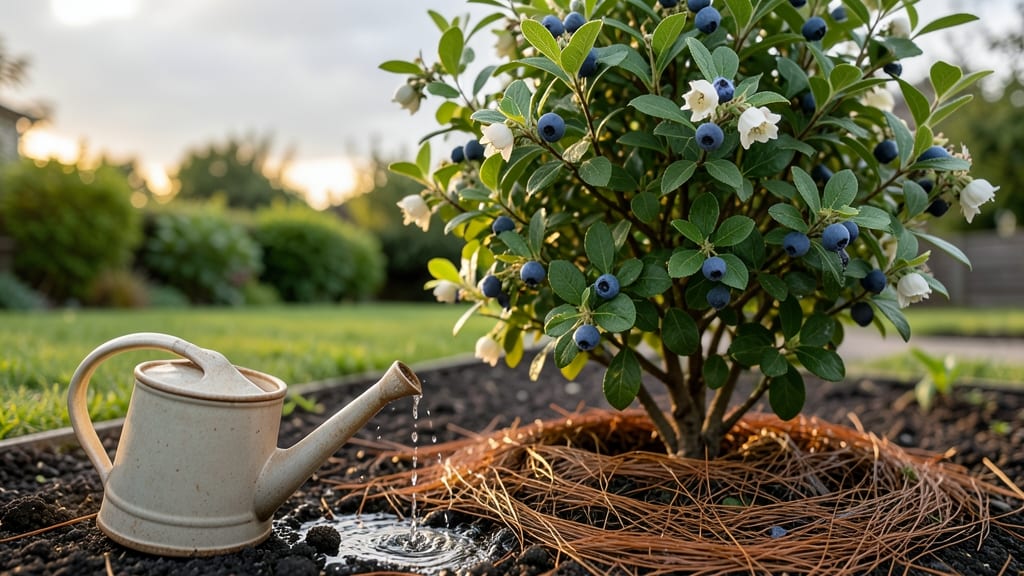
Watering blueberry bushes correctly is the key to juicy berries and healthy growth—these acid-loving plants need consistent moisture without soggy roots.
Picture this: you’ve spent months nurturing your 🫐 blueberry bush, only to watch it struggle because the soil was either bone-dry or waterlogged. The good news? With the right approach, you can avoid these pitfalls and set your bushes up for a bountiful harvest every season.
Blueberries thrive when their soil stays evenly moist, but they hate soggy feet or drought stress. Whether you’re dealing with sandy soil that drains too fast or clay that holds too much water, the solution lies in smart watering habits—like deep soaks, mulching, and adjusting for seasonal changes.
In this guide, I’ll break down exactly how often to water, the best techniques to prevent common problems, and how to keep your soil at the perfect moisture level for acid-loving growth. Let’s get those bushes thriving!
How often to water blueberry bushes for optimal growth
Blueberry bushes need consistent moisture to produce sweet, plump berries—but guessing your watering schedule can lead to underwatered roots or waterlogged soil. The key is understanding how often to water based on season, plant age, and soil type.
Young bushes and container-grown plants dry out faster than mature, in-ground shrubs, so their watering needs differ significantly.
I’ve learned from years of growing blueberries that soil moisture levels are the best indicator of when to water. Stick your finger 2-3 inches deep into the soil—if it feels dry, it’s time to water.
For container plants, check the top 1-2 inches since pots dry out more quickly. Seasonal changes also play a huge role, so let’s break down the ideal watering schedule for each phase of growth.
- Spring (March-May): Water every 2-3 days—this is when roots establish and buds form. Aim for 1-2 gallons per plant to encourage deep root growth.
- Summer (June-August): Increase to daily watering for young plants or every 2-3 days for mature bushes. Mulch heavily to retain moisture, especially during fruit ripening.
- Fall (September-November): Reduce to weekly watering as growth slows. Focus on keeping soil slightly moist to prepare for dormancy.
- Winter (December-February): Water bi-weekly only if soil is bone-dry. Overwatering can suffocate roots in cold, saturated soil.
- Container Plants: Water every 1-2 days—pots dry out 3x faster than in-ground soil. Use self-watering containers if you travel often.
- Drought Signs: Wilting leaves, crispy leaf edges, or small, dry berries mean you’re underwatering. Yellowing leaves or mushy stems signal overwatering.
One common mistake I see is shallow watering, which encourages roots to stay near the surface. Instead, water deeply to encourage roots to grow downward. Use a soaker hose or drip irrigation to deliver water slowly and evenly.
This method also reduces evaporation and keeps foliage dry, lowering the risk of fungal diseases like botrytis blight.
If you’re growing blueberries in sandy soil, water more frequently because it drains quickly. For clay-heavy soil, space waterings further apart to avoid waterlogging. Always water in the early morning to give leaves time to dry, preventing fungal spores from spreading.
I’ve found that mulching with pine needles (which also lowers soil pH) helps retain moisture and mimics the plant’s natural habitat.
Monitoring soil moisture is easier than you think. Grab a handful of soil near the roots—if it crumbles easily, water it. If it stays clumped, wait a day or two.
For container plants, lift the pot: if it feels light, it’s time to water. Never let blueberries dry out completely, especially during flowering and fruiting, as this can cause blossoms or berries to drop.
Adjust your watering schedule based on weather conditions. After a heavy rain, skip watering for a few days unless the soil is still bone-dry. During heatwaves, increase frequency but avoid overhead watering, which can scorch leaves.
I’ve had the best success with a consistent morning routine—set a timer to remind yourself, especially during the critical spring and summer months.
For newly planted blueberries, water every 2-3 days for the first month to help roots establish. After that, gradually reduce frequency as the plant matures. Mature bushes in well-draining soil can handle slightly longer intervals between waterings, but always check soil moisture first.
The goal is to keep roots consistently moist without soggy conditions.
Remember, blueberries are acid-loving plants, and their watering needs are closely tied to soil health. If your soil is too alkaline, watering with rainwater or distilled water can help maintain the ideal pH of 4.5–5.5.
Avoid tap water with high chlorine or lime content, as it can raise soil pH over time. With the right watering routine, your blueberry bushes will reward you with juicy, flavorful berries for years to come.
Best watering techniques to prevent common blueberry problems
Blueberry bushes are finicky about water—too little causes drought stress, while too much invites root rot and fungal diseases. The key is consistent moisture without waterlogging. I’ve learned that deep watering and proper mulching are game-changers for preventing these issues while keeping your bushes thriving.
Start by watering deeply—aim for 1-2 gallons per plant—to encourage roots to grow downward. Shallow watering stresses plants and leads to weak root systems. For young bushes, this means every 2-3 days, while mature plants need water every 5-7 days unless it’s extremely dry.
⚠️ callout warning
Signs of too much water: Yellow leaves, mushy stems, or soil that smells like rot. Fix it: Let soil dry slightly between waterings and improve drainage with organic mulch or sand amendments.
Morning watering is critical—it reduces evaporation and fungal risks like botrytis blight. Avoid evening water, as damp foliage overnight invites disease. If you must water in the heat, do it early morning or late afternoon to minimize stress on the plants.
For sandy soil, water more frequently but less deeply—sand drains quickly, so check moisture every 2-3 days. In clay soil, water deeply but less often—clay holds moisture longer, risking root suffocation. A simple test: Stick your finger 2 inches deep—if it’s dry, water; if damp, wait.
Mulch with 3-4 inches of organic material (pine needles, wood chips) to retain moisture and acidity. This mimics their natural acidic forest floor habitat while keeping roots cool. Replenish mulch annually—it breaks down and loses effectiveness over time.
Consider drip irrigation for large blueberry patches—it delivers water slowly and directly to the roots, reducing waste and fungal spread. Hand watering works for small gardens, but aim the hose at the base, not the leaves, to prevent disease.
Adjust your system based on rainfall—skip watering if you’ve had 1 inch of rain in the past week.