
Fertilization
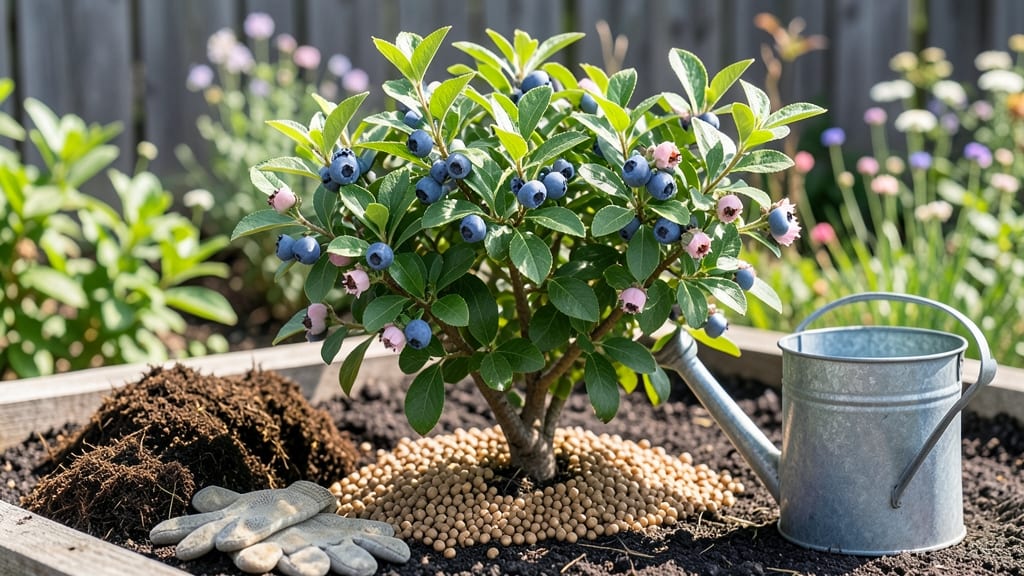
Fertilizing blueberry bushes at the right time—early spring, late winter, or fall—sets the stage for a bountiful harvest 🫐 that rivals the grocery store.
Miss the window, though, and you risk stunted growth or poor fruit set. Too much fertilizer? You’ll burn the roots. Too little? Your bushes might struggle to produce the sweet, plump berries you crave.
In this guide, I’ll walk you through the seasonal schedule that works for USDA Zone 6 (and beyond), including when to feed for flowering, fruiting, and root strength—and how to pick the right fertilizer for your soil.
By the end, you’ll know exactly when to reach for that bag of acid-loving plant food and when to let your bushes rest.

Best times to fertilize blueberry bushes by season for maximum growth
Blueberry bushes are finicky about their food schedule—apply fertilizer at the wrong time, and you might end up with lush leaves but no berries. The key is matching fertilization to their natural growth cycles, which shift dramatically by season.
I’ve learned this the hard way: one year, I fertilized my bushes in late summer, and they produced tiny, underdeveloped fruit instead of plump berries. Timing is everything!
Blueberries need three critical fertilization windows: early spring for root growth, late spring for flowering, and a light touch in early summer for fruiting. But here’s the secret: fall and winter are hands-off seasons—fertilizing then can disrupt dormancy and weaken next year’s harvest.
Let’s break down the ideal schedule so you can avoid my mistakes and maximize your blueberry bounty.
📌 Pro Tip: Always test your soil’s pH level (4.5–5.5) before fertilizing. Blueberries are acid-loving plants, and incorrect pH can make even the best fertilizer useless. Use a simple soil test kit (available at garden centers) to check before applying anything.
Let’s start with the early spring feeding (March-April), which is the most critical time. This is when your blueberry bushes wake up from dormancy and begin pushing out new growth. A high-nitrogen fertilizer (like 10-10-10 or a peat-based formula) encourages strong root and shoot development.
I like to apply about ¼ cup per plant and work it into the top 2–3 inches of soil. Avoid fertilizing if frost is still a threat—wait until the soil warms up.
Next comes late spring (May), when your bushes are flowering. This is where a balanced fertilizer (12-4-8) shines—it provides nitrogen for leaves, phosphorus for flowers, and potassium for overall health. Timing matters here too: apply it just as the flowers open to support fruit set.
Overdoing it now can lead to too much foliage and fewer berries, so follow the ¼ to ½ cup per plant rule. I’ve seen gardeners skip this step, and their bushes produce tiny, misshapen berries.
By early summer (June), your bushes are fruiting, and their needs shift again. This is when a light potassium-rich fertilizer helps develop sweet, flavorful berries. Use only half the amount you used in spring (about ¼ cup per plant) to avoid burning the roots.
I also recommend watering deeply after applying fertilizer to help it reach the roots. This is the time to watch for signs of over-fertilization, like yellowing leaves or leaf curl.
Now, here’s where most gardeners go wrong: fall and winter fertilization. Blueberries need a rest period during these months to prepare for next year’s harvest. Applying fertilizer in fall can stimulate late growth, which is vulnerable to frost damage.
Instead, focus on mulching with pine needles or peat moss to maintain soil acidity and retain moisture. I’ve seen neighbors fertilize in October, and their bushes struggled the following spring with weak stems and poor flowering.
One more tip: if you’re in a warmer climate (USDA Zone 8+), your blueberries might stay active later into fall. In this case, you can extend the light summer feeding into early July, but stop by August to let the plant prepare for dormancy.
Always adjust based on your local frost dates—my garden journal helps me track this every year.
Finally, remember that organic fertilizers (like composted manure or fish emulsion) work well for blueberries but require
How to choose the right fertilizer type for blueberry bushes at each stage
Blueberry bushes demand specific nutrients at different growth stages, and choosing the wrong fertilizer can stunt fruit production or harm your plants.
As an acid-loving shrub, they need low pH fertilizers rich in magnesium and zinc, but the ratios change depending on whether your bush is flowering, fruiting, or recovering from harvest. Let’s break down the best fertilizer types for each stage and how to pick them.
In early spring, focus on nitrogen-rich fertilizers to fuel new leaf growth, while late summer calls for potassium-heavy blends to support fruit ripening. Organic options like composted manure or fish emulsion work well for slow-release nutrition, while synthetic fertilizers offer precise nutrient control.
The key is balancing organic matter with targeted micronutrients to keep your blueberries thriving year-round.
Organic Fertilizers
Synthetic Fertilizers
For newly planted bushes, I recommend a balanced organic fertilizer like cottonseed meal (6-1-1), which provides nitrogen while slowly acidifying the soil. Once established, switch to a higher-potassium formula (e.g., 10-10-20) during fruiting season to boost berry sweetness.
Always pair fertilizers with sulfur or peat moss to maintain the ideal pH 4.5–5.5 range for blueberries.
Micronutrients like magnesium and zinc are critical but often overlooked. Signs of deficiency include yellowing leaves (chlorosis) or stunted growth. A chelated micronutrient blend applied in early spring can prevent these issues. For organic gardeners, kelp meal or greensand are excellent sources of these trace elements.
In late summer or early fall, avoid heavy fertilizing—your bush needs time to harden off before winter. Instead, top-dress with compost or well-rotted leaves to feed roots gradually.
This prepares the plant for dormancy while keeping the soil rich for next year’s growth. Always water fertilizers in deeply and thoroughly to prevent salt buildup near the roots.
Pro tip: Test your soil’s pH and nutrient levels annually with a home kit. If your blueberries show signs of stress—like poor fruit set or leaf discoloration